
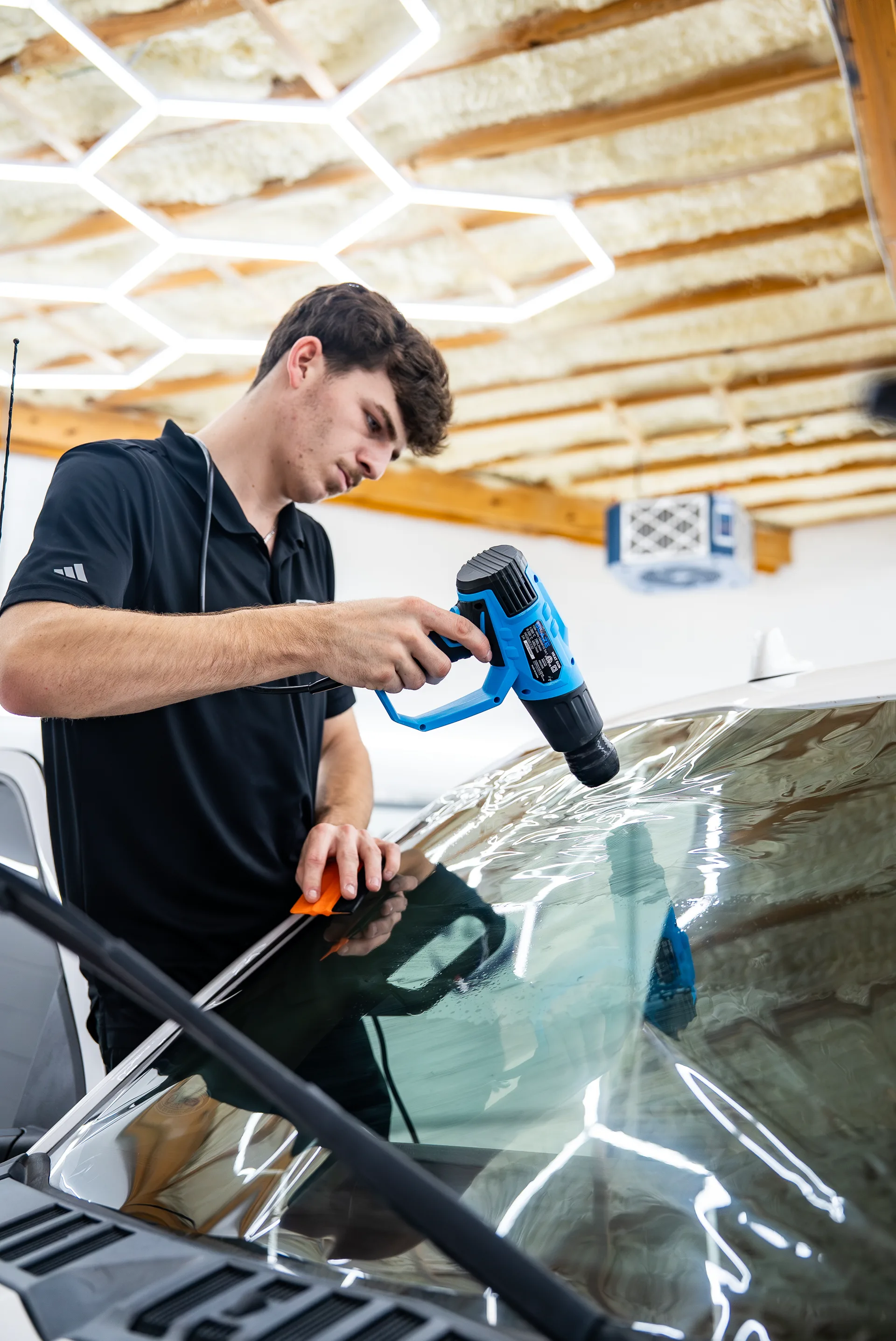
Louisiana law sets specific limits on how dark and reflective your vehicle’s window tint can be. Understanding these rules before scheduling an installation ensures you enjoy every benefit of tinted windows—cooler cabin temperatures, UV protection, and added privacy—without risking a traffic citation. Below, we break down the exact VLT (visible light transmission) percentages for every window, cover medical exemptions, and outline the penalties for non-compliance.
Driving with illegal tint in Louisiana can result in fines of up to $500 for repeat offenses, and officers routinely use tint meters during traffic stops and annual vehicle inspections. Staying compliant is not something you can leave to chance.
Benefits of Window Tinting
Heat rejection. Quality ceramic window film intercepts infrared energy at the glass before it heats your dashboard and seats. In a south Louisiana summer, that means a noticeably cooler cabin, faster cool-downs, and less strain on your air conditioner.
UV protection. Ceramic films block 99% of ultraviolet radiation. That protects your skin on every commute—UVA passes straight through untreated side glass—and keeps leather, vinyl, and trim from fading and cracking over time.
Glare reduction. Tint cuts harsh sunlight and reflected glare from other vehicles, reducing eye fatigue and making early-morning and late-afternoon driving safer.
Privacy and appearance. A properly chosen shade keeps prying eyes away from whatever is in your cabin and gives the vehicle a cleaner, more finished look—all while staying within the legal limits described below.
Louisiana Window Tint Laws: What You Need to Know
For passenger cars, Louisiana requires each window to allow more than a minimum percentage of visible light through:
| Window | Requirement |
|---|---|
| Windshield | Non-reflective tint above the AS-1 line only |
| Front Side Windows | More than 40% VLT |
| Rear Side Windows | More than 25% VLT |
| Rear Window | More than 12% VLT (dual side mirrors required) |
General Window Tinting Rules for All Vehicles
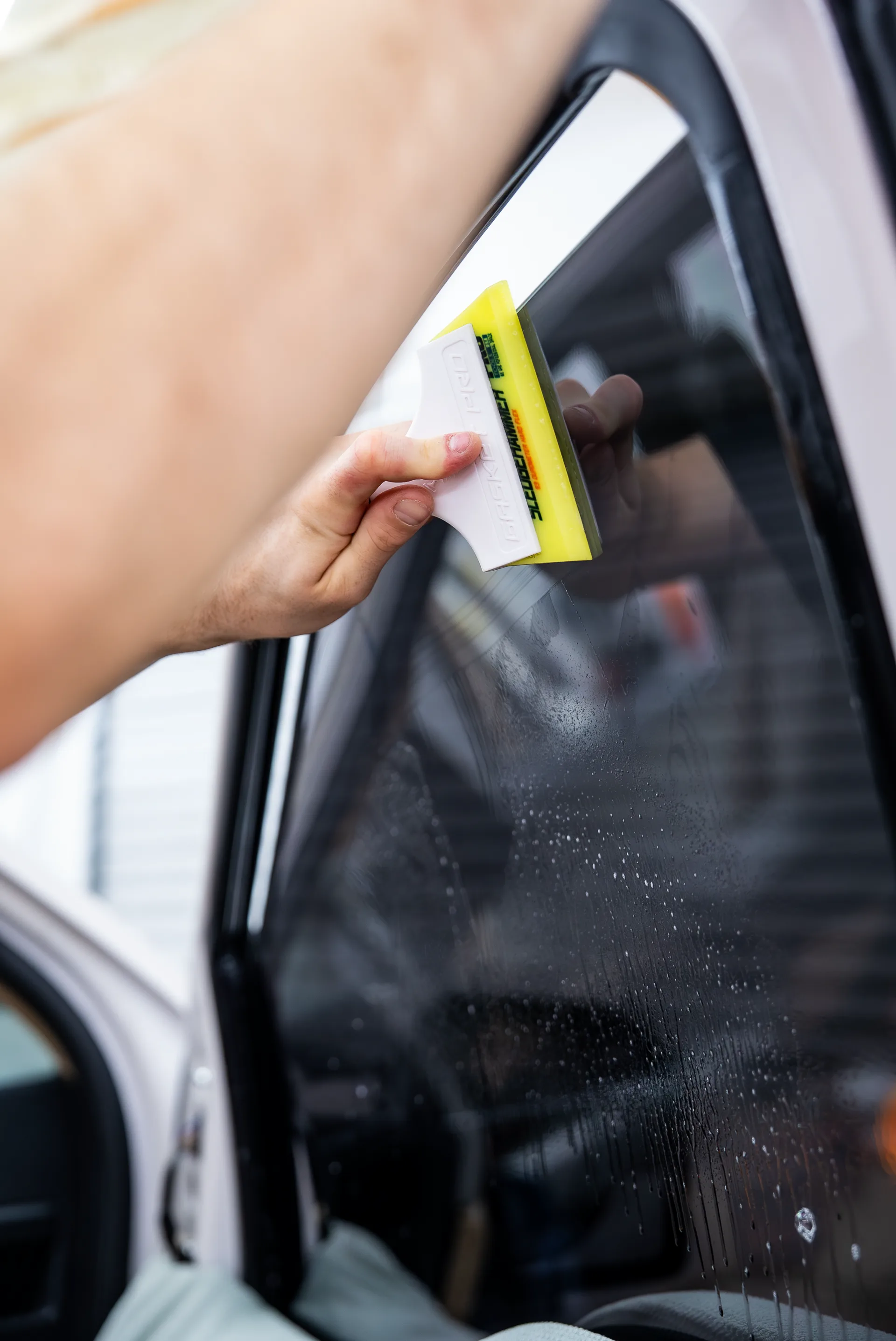
- Tint Application: On the windshield, tint may only be applied above the AS-1 line—a manufacturer’s marking that indicates the top of the critical viewing area. When no AS-1 line is present, Louisiana defaults to a five-inch limit measured from the top edge of the glass.
- Light Transmission: Each window position has its own minimum VLT: more than 40% for front side windows, more than 25% for rear side windows, and more than 12% for the rear window (when the vehicle has dual side mirrors).
- Reflectance: Louisiana caps window reflectivity at 20%. Highly reflective or mirror-style tints that exceed this limit are not legal, because they can create dangerous glare for oncoming drivers and pedestrians.
- Color Restrictions: Red, amber, and blue tint colors are not permitted on any vehicle window in Louisiana.
Additional Louisiana Tinting Regulations
- Side Mirrors: Any vehicle with tint on the rear window is required to have functional exterior mirrors on both sides.
- Medical Exemptions: Since January 1, 2019, Louisiana no longer issues Window Tint Exemption Certificates through the Department of Public Safety. Drivers who require darker tint for a documented medical condition must carry a signed statement from a licensed physician or optometrist. This letter must be presented at annual vehicle inspections and shown to law enforcement upon request.
- Tint Identification Sticker: Louisiana law mandates a sticker placed between the film and glass on the driver’s side window, verifying the tint meets state requirements.
Where to Get Legal Window Tinting
Surface Protection Studio in Gonzales, LA, is your go-to shop for professional, law-compliant window tinting. We install premium LLumar window films that block 99% of UV rays and reject up to 98% of infrared heat, in the exact VLT you need to stay within Louisiana law.
Our team handles everything from precise VLT selection to flawless, bubble-free application—see the current packages on our window tint page, or call (225) 416-9588 to schedule your tint appointment today.
Final Thoughts
Choosing the right window tint is about more than appearance—it’s about staying legal, protecting your vehicle, and driving comfortably year-round. By keeping your tint within Louisiana’s VLT and reflectivity limits, you avoid citations and enjoy every benefit that quality film provides. If you’re unsure whether your current tint is compliant, stop by Surface Protection Studio in Gonzales, LA for a free tint check.
For the full text of Louisiana’s window tint statute, visit the Louisiana Department of Public Safety.